Common Suite Hotels Mistakes: Definitive Guide & Risk Mitigation
The contemporary hospitality market features complex multi-room luxury assets that introduce distinct operational vulnerabilities. Corporate travel coordinators, project managers, and family office directors frequently underestimate the hidden legal, mechanical, and logistical pitfalls tied to premium lodging. Navigating extended executive deployments or high-end leisure stays requires moving past standard booking habits. Failing to account for architectural nuances, unlisted fees, and rigid cancellation policies often triggers severe administrative friction and unexpected financial liabilities. Consequently, recognizing common suite hotels mistakes protects enterprise capital and ensures operational continuity across diverse international destinations.
Furthermore, the global extended-stay sector operates under complex zoning rules, varied lease obligations, and shifting service standards. Standard consumer travel aggregators routinely obscure critical operational variables such as acoustic attenuation limits, multi-zone HVAC dependencies, and restrictive master folio clauses. Therefore, implementing a rigorous analytical framework for evaluating high-end accommodations prevents catastrophic oversight. Mastering these insights safeguards long-term travel allocations against inflationary creep and administrative bottlenecks.
Navigating this specialized operational discipline demands an uncompromising editorial perspective. Whether evaluating a vertical glass penthouse in a major financial hub, a restored historic European grand suite, or an isolated wellness compound, understanding underlying hazard taxonomies protects corporate investments. Ultimately, this comprehensive guide provides an objective examination of the conceptual frameworks, error taxonomies, and strategic methodologies required to avoid common suite hotels mistakes with absolute professional precision.
Understanding “common suite hotels mistakes”
The phrase common suite hotels mistakes is frequently oversimplified by commercial travel blogs and automated safety checklists that reduce intricate structural vulnerabilities, legal contract liabilities, and mechanical dependencies to basic advice. These superficial summaries ignore critical real-world realities like unauthorized third-party vendor access, unverified acoustic insulation ratings that compromise legal confidentiality, and ambiguous master lease liability clauses. In professional asset administration, executing a proper analysis of common suite hotels mistakes requires focusing on measurable structural and operational parameters. These parameters include mechanical redundancy ratios, cryptographic Wi-Fi isolation metrics, emergency egress verification, and rigorous legal contract indemnification clauses. A common misunderstanding assumes that mitigating luxury travel risk relies solely on purchasing standard trip cancellation insurance. In reality, travel insurance rarely covers operational failures, data breaches, or infrastructural breakdowns occurring within long-term suite stays.
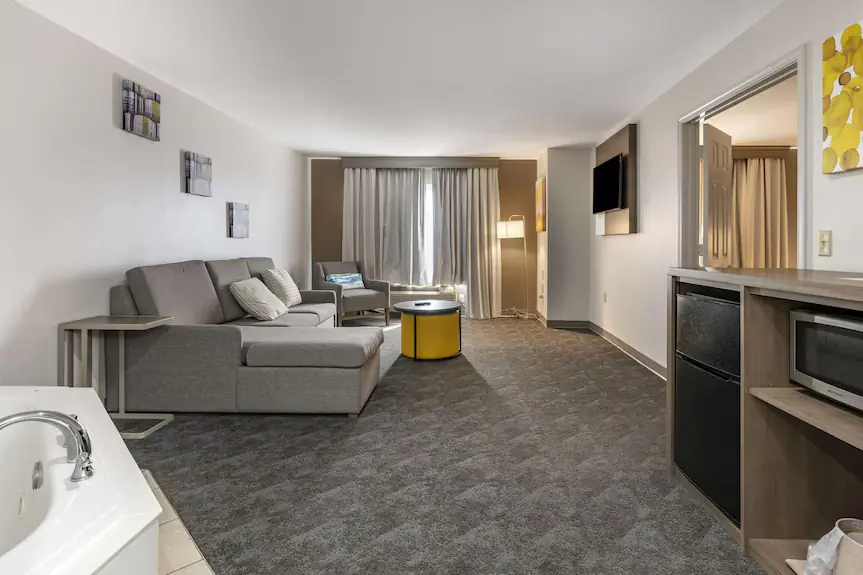
Analyzing these operational challenges requires recognizing the tension between opulent aesthetic styling and fundamental safety engineering. An asset manager investigating common suite hotels mistakes will find that floor-to-ceiling glass facades and open-plan kitchen designs frequently lack adequate ventilation interlocks and impact-resistant glazing. Planners relying exclusively on surface-level marketing materials routinely miss critical life-safety and privacy constraints. Furthermore, mastering the principles behind common suite hotels mistakes involves assessing how corporate risk officers, structural engineers, and property operators collaborate to establish bulletproof residency protocols across international portfolios.
Deep Contextual Background
The historical evolution of risk management in luxury suite hospitality traces its origins to nineteenth-century European grand hotels and early twentieth-century residential apartment-hotels. Early property administrators instituted rigid physical security protocols, manual ledger checks, and dedicated staff vetting procedures to protect high-profile aristocratic tenants from theft, espionage, and structural hazards.
Throughout the late twentieth century, the rise of branded extended-stay chains and complex real estate franchising models modernized this landscape. Hospitality operators introduced standardized safety codes, but multi-room configurations created unique operational blind spots regarding internal fire spread, unauthorized guest access, and extended plumbing failures. By the mid-2020s, the convergence of remote executive leadership, heightened corporate espionage threats, and multi-generational family travel drove the need for sophisticated risk mitigation protocols. Modern asset managers now balance physical safety audits with cybersecurity hardening. Examining this sector requires navigating a mature global market where boutique ownership groups and global hospitality conglomerates define the baseline of exceptional risk governance.
Conceptual Frameworks and Mental Models
Evaluating the structural maturity of operational strategies in suite hospitality relies on structured mental models:
-
The Mechanical Redundancy Index: Measures the availability of backup climate control, power generators, and plumbing systems to prevent habitability failures.
-
The Information Security Perimeter: Evaluates the encryption strength and physical isolation of in-suite data networks against corporate espionage and interception.
-
The Egress and Evacuation Coefficient: Assesses the clarity, speed, and unobstructed nature of emergency escape routes from multi-level penthouse suites.
-
The Legal Indemnification Threshold: Quantifies the extent to which master lease contracts protect corporate entities from liability during property-related accidents.
Key Categories or Variations
| Error Category | Primary Operational Focus | Core Operational Trade-Off |
| Infrastructural Mismanagement | Failing to audit HVAC, plumbing, and backup power systems prior to occupancy | Risks sudden habitability breakdowns offset by pre-stay inspection labor |
| Digital Security Neglect | Relying on unencrypted public networks within multi-room executive suites | Exposes sensitive corporate data offset by requiring specialized IT deployment |
| Contractual Oversight | Accepting standard hotel liability clauses without legal review | Exposes firm to litigation offset by lengthy legal negotiation periods |
| Spatial Inefficiency | Booking oversized multi-room layouts for single occupants | Inflates accommodation budgets offset by generous physical workspace |
| Ancillary Fee Blindness | Overlooking mandatory resort fees, parking tariffs, and minibar surcharges | Triggers unexpected budget overruns offset by upfront contract auditing |
| Vendor Access Neglect | Failing to restrict housekeeping and maintenance entry schedules | Compromises privacy offset by managing internal operational friction |
When applying decision logic to these variations, operational leaders must align risk mitigation methodology with the specific asset class and threat profile. Infrastructural auditing and legal indemnification suit multinational firms managing high-stakes executive relocations. Meanwhile, cybersecurity hardening and physical access controls attract legal teams and financial institutions handling sensitive corporate transactions.
Detailed Real-World Scenarios
Overlooking HVAC Redundancy During Extended Executive Relocations
A multinational technology firm coordinates a ninety-day stay in a luxury coastal penthouse suite for an incoming executive director.
-
Constraint: The regional climate is prone to severe tropical storms that threaten grid stability and strain older building compressors.
-
Failure Mode: A severe storm knocks out local power and floods the subterranean parking structure, causing the penthouse’s primary air conditioning and backup generator to fail simultaneously.
-
Decision Point: Implement pre-stay engineering verification audits to confirm independent backup generator capacity and secure a contractual emergency relocation clause before signing the lease.
Neglecting Digital Network Security in Legal War Rooms
A litigation firm reserves a multi-room metropolitan suite to serve as a secure staging ground for a high-profile international arbitration hearing.
-
Constraint: Attorneys must review classified financial documents and conduct encrypted video depositions without risk of audio or digital eavesdropping.
-
Failure Mode: Standard hotel Wi-Fi networks permit packet sniffing, and thin partition walls allow adjacent guests to overhear confidential strategy discussions.
-
Decision Point: Deploy dedicated hardware VPN routers, conduct acoustic decibel testing on interior walls, and disable smart-room voice assistant devices prior to occupancy.
Underestimating Mandatory Ancillary Fees on Long-Stay Folios
A financial consultancy books a four-week suite stay for a team of auditors conducting an onsite corporate review.
-
Constraint: The billing department works under strict client project caps that exclude miscellaneous hotel service charges.
-
Failure Mode: At checkout, the folio includes thousands of dollars in unbudgeted valet parking, high-speed internet surcharges, and mandatory resort facility fees.
-
Decision Point: Engage property general management prior to contract execution to negotiate a flat all-inclusive master rate that explicitly waives extraneous fees.
Failing to Verify Spatial Configurations and Workspaces
A media production company secures a multi-room residential suite for a traveling creative team requiring dedicated editing bays.
-
Constraint: The unit features an open-plan aesthetic layout with minimal physical separation and insufficient electrical power outlets.
-
Failure Mode: Multiple editing workstations overload the circuit breakers, and background noise from common areas disrupts remote client conferencing.
-
Decision Point: Request detailed architectural floor plans and electrical capacity logs before finalizing bookings to ensure operational suitability.
Planning, Cost, and Resource Dynamics
Executing a robust strategy to avoid operational missteps involves balancing specialized audit and legal review expenses against massive financial liabilities, project delays, and medical emergencies. The economic model requires analyzing indirect expenses—such as third-party engineering inspections, legal retainer fees, and insurance premium adjustments—against total portfolio security.
| Economic Variable | Financial Variability | Strategic Impact on Asset Evaluation |
| Independent Engineering Inspection Fees | Fixed Upfront Cost | Identifies hidden plumbing and electrical hazards prior to lease signing |
| Specialized IT Security Deployments | Variable Hardware Cost | Secures private data networks against corporate espionage and hacking |
| Legal Master Contract Auditing | Hourly Professional Fee | Ensures bulletproof indemnification and liability protection |
| Emergency Relocation Contingency Fund | Retainer Capital | Provides immediate funding for alternative lodging during structural failures |
Tools, Strategies, and Support Systems
-
Independent Architectural and Engineering Inspection Services: Professional firms conducting pre-occupancy structural, HVAC, and life-safety audits.
-
Portable Enterprise-Grade VPN and Firewall Hardware: Specialized networking tools establishing encrypted tunnels for secure in-suite communications.
-
Acoustic Decibel Meters and Sound Scanners: Diagnostic instruments verifying speech privacy and wall attenuation across suite partition rooms.
-
Legal Liability Review Playbooks: Standardized audit frameworks for identifying dangerous indemnification loopholes in hotel contracts.
-
Environmental Air Quality Testing Kits: Portable meters detecting volatile organic compounds, mold spores, and humidity extremes in closed suites.
Risk Landscape and Failure Modes
The primary operational hazard inherent in luxury suite accommodations involves compounding mechanical failures within complex multi-zone environments. Unlike standard single-room hotel keys, large suites incorporate advanced smart-home automation, extensive plumbing manifolds, and commercial-grade kitchen appliances. When a central water manifold fails behind a finished wall, it can cause extensive structural damage and mold growth before detection, forcing immediate emergency evacuation.
Another compounding risk relates to security vulnerabilities in hybrid residential-hotel developments. Buildings that share public access points between permanent condominium owners and transient luxury guests frequently experience compromised lobby and elevator security. Asset managers mitigate this by mandating private, keycard-locked elevator shafts and conducting rigorous background checks on building management.
Governance, Maintenance, and Long-Term Adaptation
Sustaining long-term risk reduction across suite portfolios requires a disciplined administrative governance framework. Corporate mobility directors and security officers must institute mandatory pre-occupancy inspection protocols, auditing physical safety, data security, and mechanical health before any executive checks in. Furthermore, if a partnered property experiences recurring infrastructural failures or security breaches, procurement teams must immediately blacklist the property from corporate travel rosters.
Risk governance must also adapt to emerging cybersecurity threats, shifting climate conditions, and evolving global health standards. Maintaining ongoing collaboration with legal and IT security departments ensures that suite evaluation protocols remain resilient against sophisticated digital and physical threats. Proactive governance protects both enterprise capital and personnel well-being across global portfolios.
Measurement, Tracking, and Evaluation
-
Pre-Occupancy Audit Compliance Rate: Measures the percentage of suite properties successfully passing mandatory engineering, security, and legal checks prior to check-in.
-
Infrastructural Incident Frequency: Tracks the number of mechanical, plumbing, or climate control failures reported during active long-term stays.
-
Information Security Breach Incidents: Quantifies any unauthorized network access attempts or data leaks intercepted during suite occupancy.
-
Emergency Relocation Response Time: Evaluates the speed and efficiency with which staff execute alternative lodging protocols when a suite fails habitability standards.
Common Misconceptions and Oversimplifications
-
Myth: Standard travel insurance policies fully cover financial losses resulting from structural failures or health hazards in luxury hotel suites. Reality: Standard travel insurance typically excludes operational infrastructure breakdowns, landlord disputes, and corporate liability issues.
-
Myth: Booking a five-star hotel suite automatically guarantees absolute acoustic and digital privacy for confidential meetings. Reality: Many luxury properties feature thin partition walls and unencrypted public Wi-Fi networks vulnerable to interception.
-
Myth: Independent engineering inspections are an unnecessary expense for short-term executive hotel stays. Reality: Pre-occupancy inspections prevent catastrophic habitability failures during critical multi-month project deployments.
-
Myth: Hotel general liability insurance protects corporate guests from all accidents occurring within a leased suite. Reality: Master lease agreements often contain restrictive indemnification clauses that shift liability onto the corporate tenant.
-
Myth: Smart-room automation systems in modern suites are completely secure against remote hacking and eavesdropping. Reality: Unsecured Internet-of-Things devices within luxury suites can serve as entry points for digital surveillance.
-
Myth: Extended-stay suite properties operate under identical building and fire safety codes as standard commercial office buildings. Reality: Residential-hotel hybrids frequently feature complex mixed-use zoning rules that complicate emergency egress and safety compliance.
Ethical, Practical, or Contextual Considerations
Evaluating the risk governance of luxury suite accommodations intersects with broader discussions surrounding corporate duty of care, landlord liability, and worker safety in the hospitality sector. As organizations deploy executives into complex international properties, employers bear a profound ethical obligation to ensure that physical accommodations meet uncompromising health and safety standards. Progressive enterprises address these challenges by enforcing rigorous due diligence protocols, respecting local labor and safety regulations, and maintaining transparent communication channels with property ownership groups.
Conclusion
Mastering the complexities involved in identifying, evaluating, and governing travel portfolios centered on avoiding common suite hotels mistakes requires an uncompromising analytical perspective. True authority involves looking past promotional marketing imagery to examine mechanical redundancy indices, information security perimeters, and legal indemnification thresholds. Approaching suite risk management with professional intellectual honesty ensures that discerning corporate operators achieve absolute operational harmony, uncompromised personnel safety, and enduring financial security across any global destination.